
KYIV, UKRAINE - Like a thunderstorm out at sea gaining on the shore, the scourge rolled into Kyiv at a quarter past two in the morning, with synthetic lightning bursts made not by static discharges but by the detonation of high explosives. Too distant to hear at first, but not for long as the horde defeated successive layers of air defenses, like a tidal surge pouring over a levee. The approaching light show took on more sinister dimensions each minute until by three o’clock the city center was finally breached, and the skies lit up like in the ancient battles of angels and devils told in the tales of old.
Night hid the invaders from sight but their presence was known by the full-spectral sensory-kinetic distortions left in their wake. The signature roaring sound of the Shahed drones’ motorcycle engines filled the air, with Ukraine’s ground-based air defense machine guns rapid firing high-caliber rounds in their pursuit. The red tracers of surface to air defense missiles, so distant earlier now danced overhead like faeries at a garden party – each hovering for a moment midair before locking target, changing course, and accelerating with a rocket burst back into darkness. A brief moment of suspense – then a giant fireball erupted in the sky turning night into day – seconds later its deafening thunderclap arrived to shake buildings, set off car alarms, and break glass – success! But other interceptors that missed their marks self-destructed in air – letting enemy cruise missiles go free. Supersonic objects whirred unseen – ballistic missiles – with extreme geometries that defied both human comprehension and machine interception alike. It went on for hours.
According to the Ukrainian Air Force, last Wednesday into Thursday was the largest aerial assault unleashed upon Ukraine since the start of the war four years ago. A notable distinction, yet increasingly common nowadays as Russia mounts heavier and heavier attacks, breaking their own high scores every few months. The air force said that Russia launched 675 drones, 35 cruise missiles, and 21 ballistic missiles that night. Though most of the enemy weapons were intercepted, by the air force’s numbers at least nine ballistic missiles, six cruise missiles, and 23 drones hit targets on the ground.
As the sun rose – while bombs continued to fall – a plume of black smoke rose in the city’s north – perhaps from a gas station that was hit, or perhaps from an infrastructural or military object whose identity is shielded by martial law censorship. But in the city’s south-east, on the Left Bank of the Dnipro River, is where a grave calamity happened that will be talked about for years to come.
Left Bank Massacre
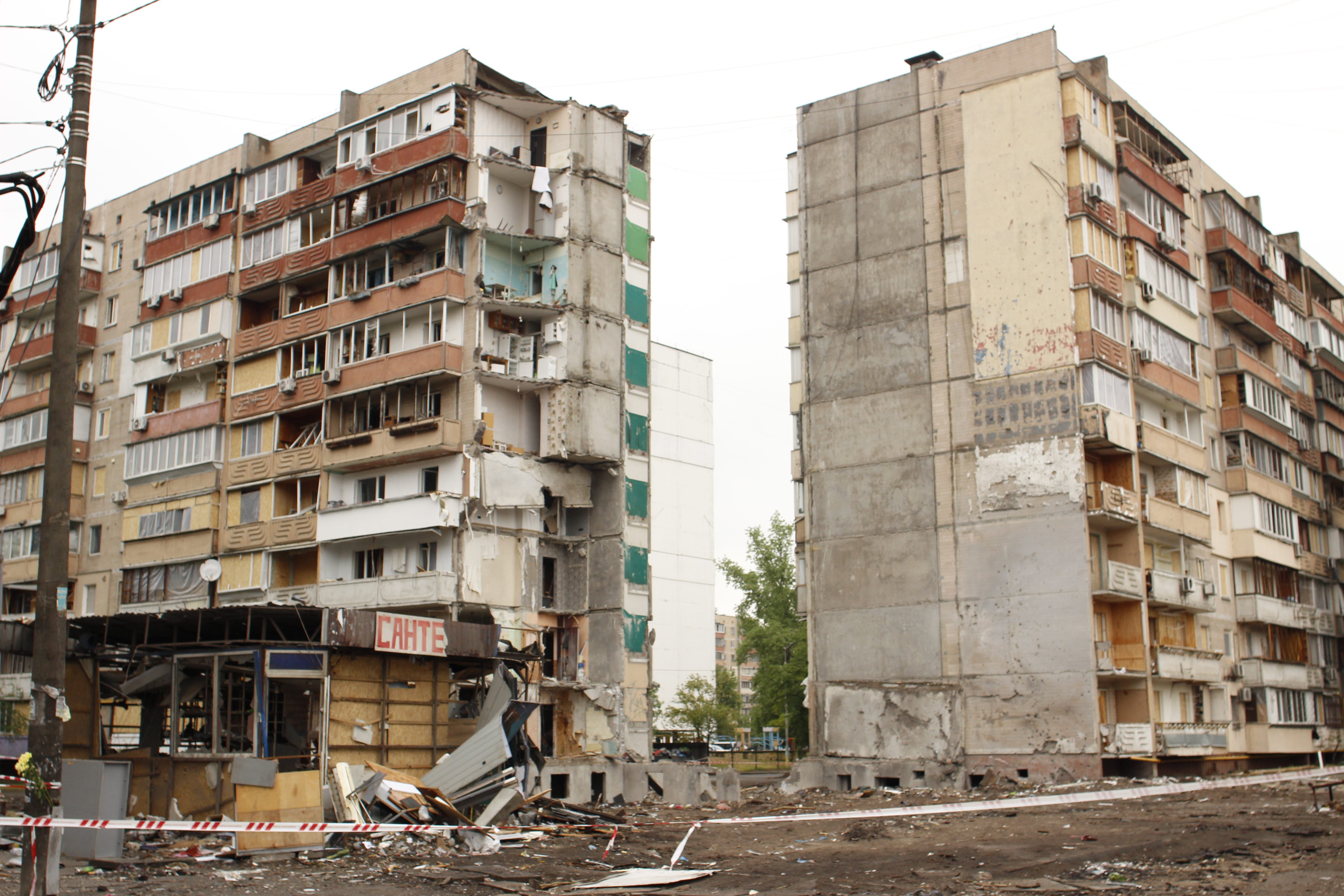
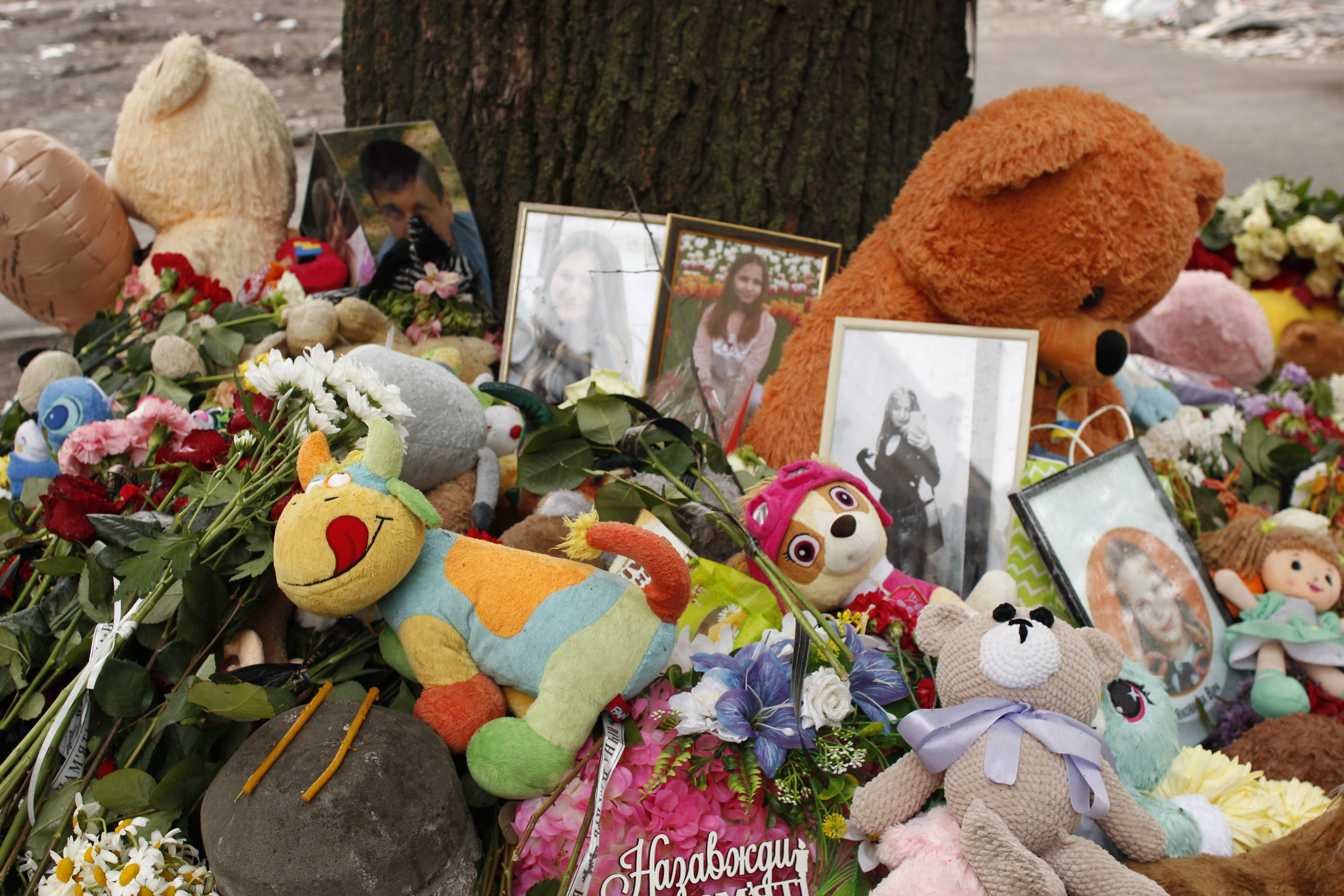
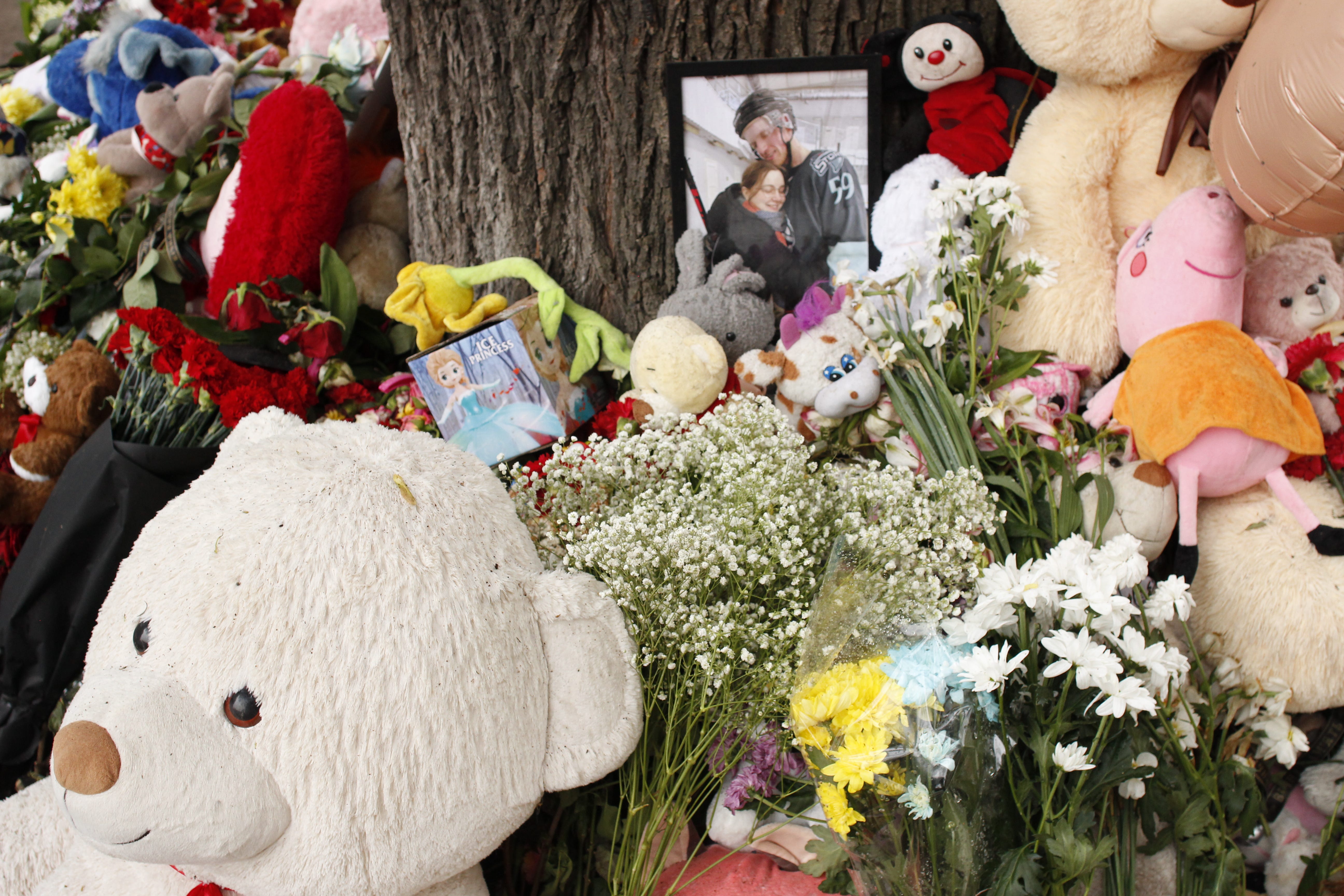
At Bratstva Tarasivtsiv Street 9, there is a tree that has become a memorial for the tragedy that happened there about an hour before dawn. A cruise missile collided with the third floor of an apartment block, detonated and partially collapsed the nine-story Soviet-era building. Over one hundred thousand cubic feet of stone fell to the earth, where it burned in a rubble heap, and 24 civilians were massacred in a smokey tomb. Among the dead were three young girls aged 12, 15, and 17. At least 50 others were wounded. After a heroic 28-hour rescue operation, the president visited later that day.
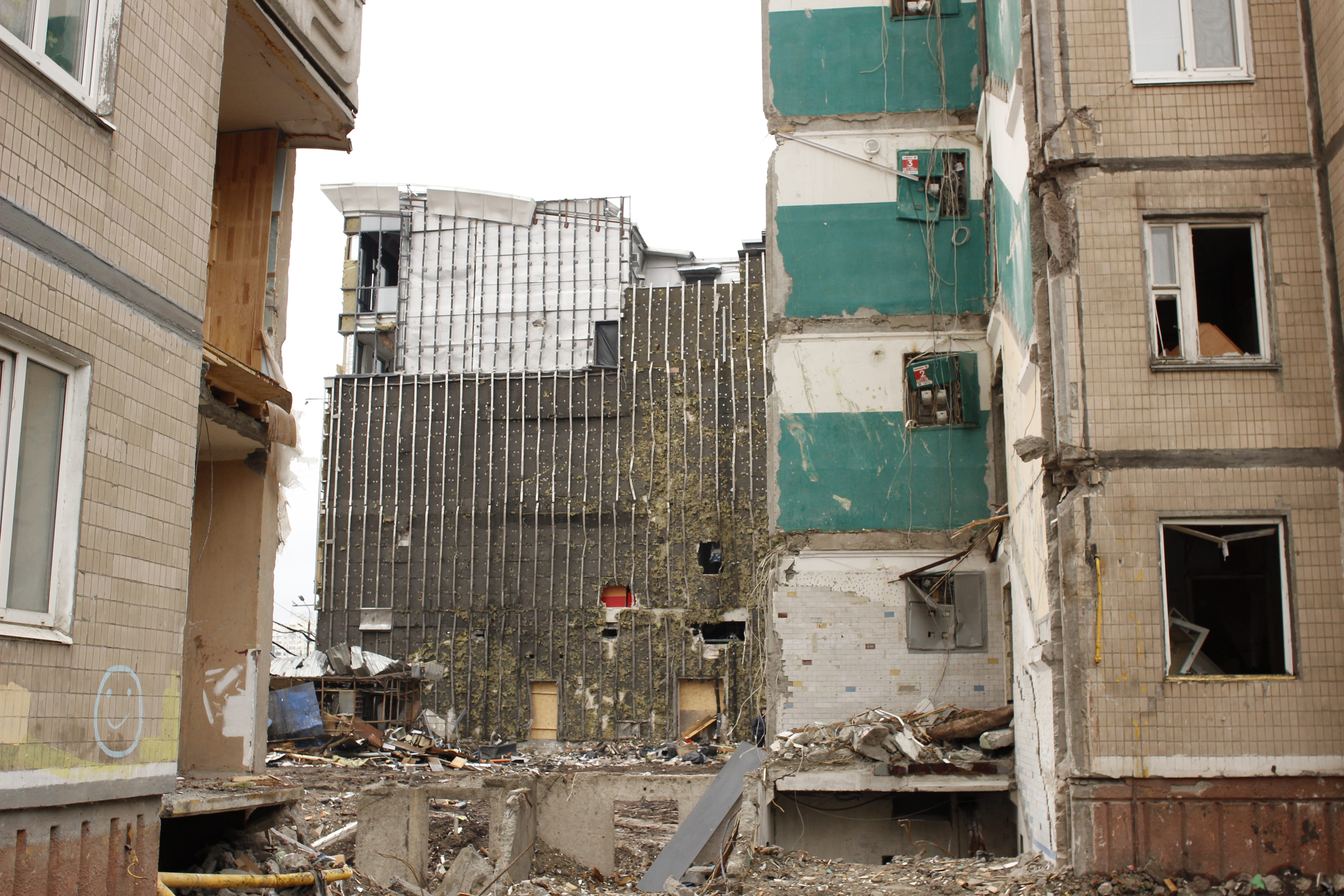
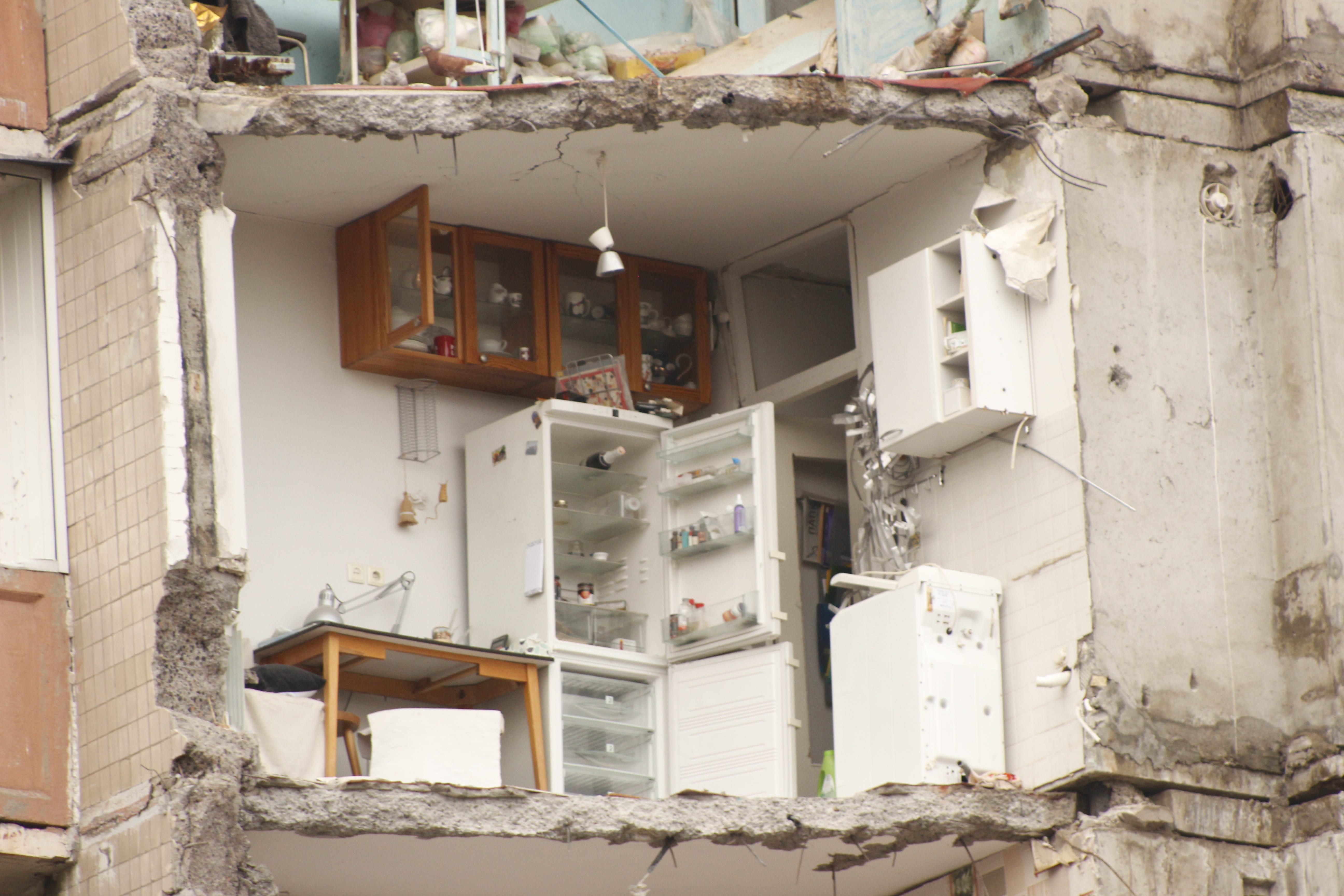
But now the rescue crews have left, and the news cameras and the politicians have all gone. All that remains is the haunted void where two dozen humans once lived – where pigeons now live in the semi-demolished apartments that now constitute rocky bluffs. The building is cleaved straight through a column of kitchens, like a perverse dollhouse exposing the states of victims’ refrigerators in the final moments before their demise. On the sixth floor: a bottle of champagne never to be drunk; sauces and condiments never to adorn another buterbrod; medicine jars and skin treatments for ailments never again to be suffered.
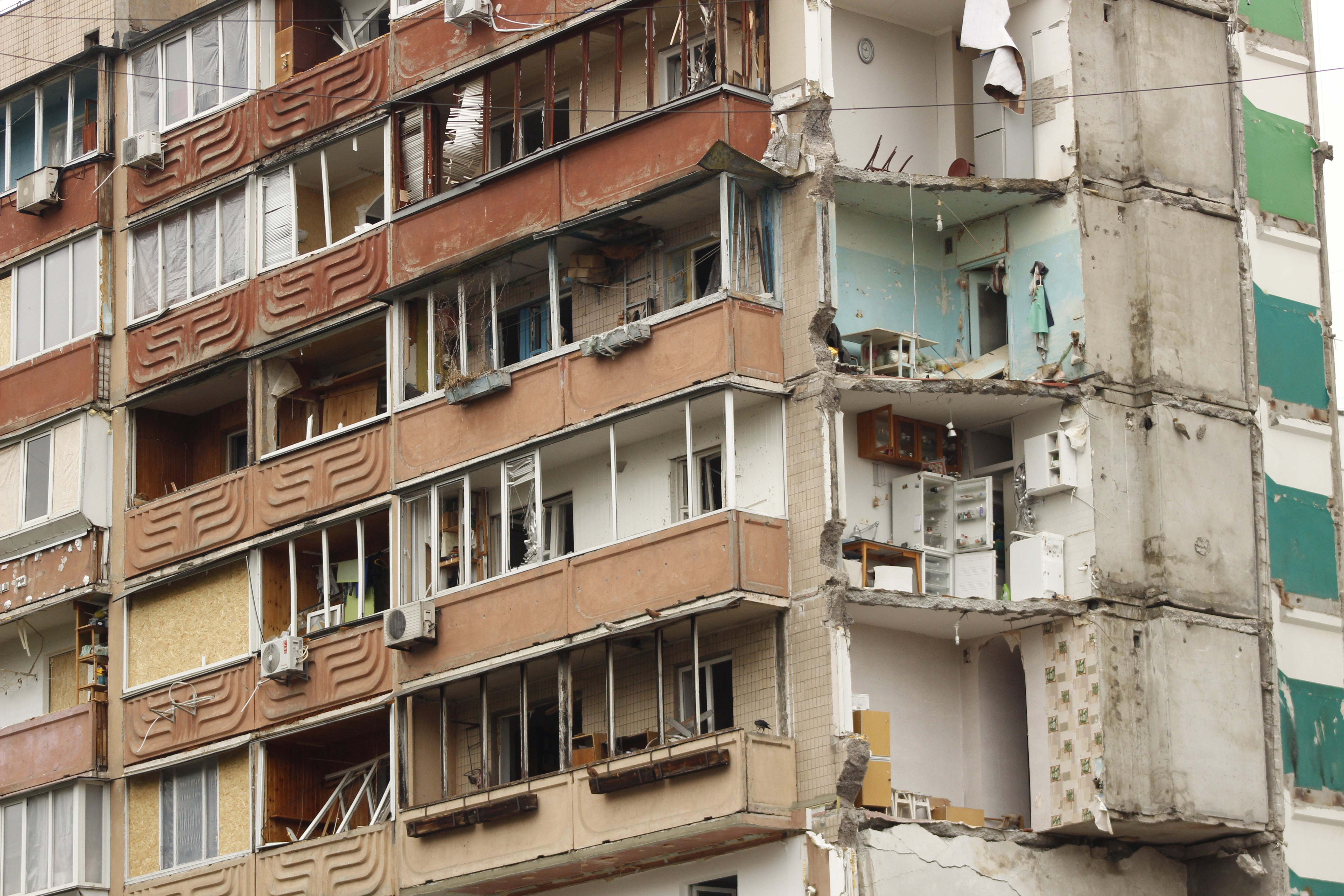
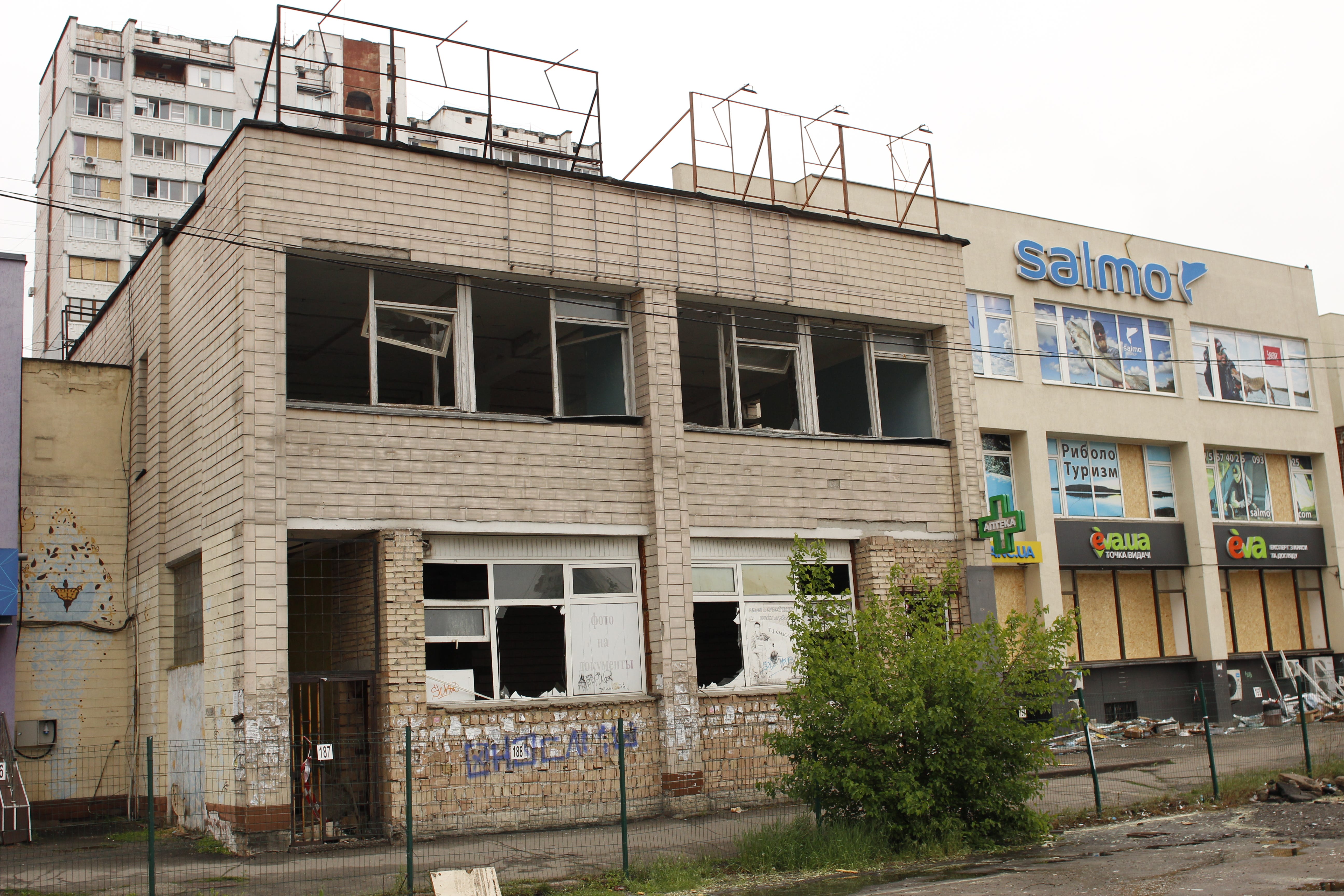
The blast also did severe damage to: a mini shopping mall, an arts center, three commercial buildings, a 16-story apartment building where windows were broken on all floors, and a row of Ukraine’s characteristic sidewalk business kiosks. A separate kiosk was completely destroyed.
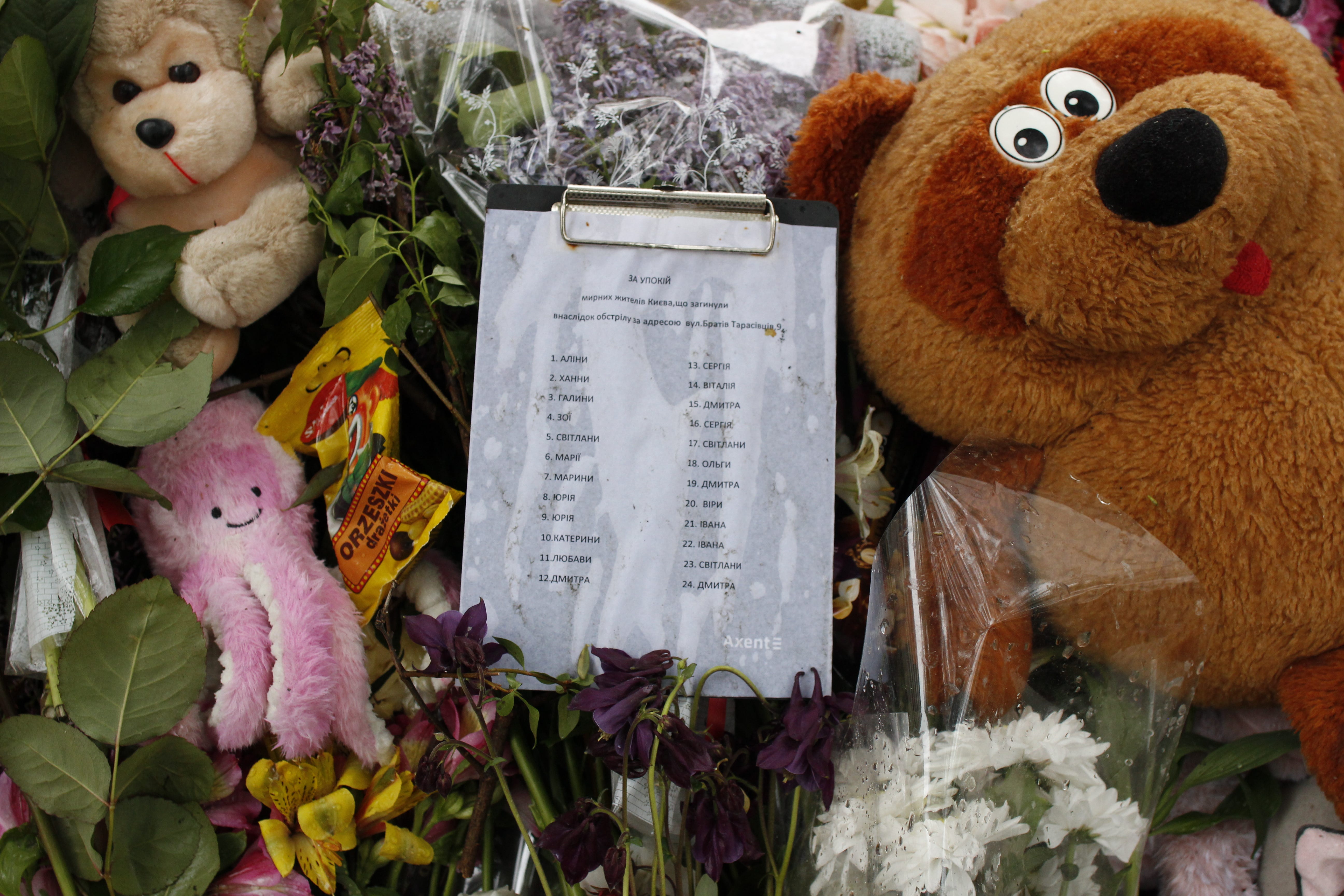
At the memorial tree, distraught mourners brought flowers, toys, stuffed bears, candies, candles, and photos of the deceased. On a balloon it was written in marker, “At this place there should be words of greeting and the finest wishes! But words of sympathy! Tears … sorrow … pain! Sympathy to kin and to close ones. It cuts deep, that we live in such a time when they leave our earth too soon without deserving it! To the Kingdom of Heaven, each one.” A sheet of paper listed the names of the dead.
No End in Sight
The attack came on the heels of a short-lived ceasefire commemorating the anniversary of the Soviet Union’s defeat over the Nazis in the Great Patriotic War. Russia had threatened Ukraine with a massive retaliation on Kyiv if Ukraine dared to attack Moscow during its most important annual parade. Telegram rumors simmered all week – even that Kyiv might receive the nuclear bomb! – before the president of the United States intervened and declared the three-day ceasefire. The prohibition on long-range attacks held. But less than two days after its expiration, Russia launched this attack.
Since then, Ukraine promised and delivered retaliatory strikes on Moscow – launching its largest sustained drone attacks on Russia to date. And since then Russia has promised that it too will counter-retaliate in-kind.
Kyiv and the nation wait for the next assault. But that’s life.
All photos by John Bolger.